
A lower price matters only if the truck can do the required work
A cheaper truck that cannot pass through the warehouse door, carry the required load at rack height or work with the pallet will not deliver the expected saving. First apply the same mandatory criteria to both new and used trucks: load and load centre, height, aisle, floor, environment and shift schedule. Remove options that do not comply before comparing price.
For a used truck, establish the configuration that actually exists rather than relying only on the model's factory configuration. The forks, battery, mast or attachment may have been changed. Every material change needs corresponding records and an appropriate technical assessment; the buyer should not infer capacity from a model name or an incomplete photograph of a data plate.
Use history affects the certainty of the estimate
The hour meter is one input; it does not fully describe duty intensity or maintenance practice. Where available, compare the service history, repaired components, working environment and reason for disposal. Missing history does not prove that a truck is poor, but it reduces the certainty of the estimate; inspection and contingency costs should reflect that uncertainty.
Instead of asking what percentage of life remains, request a system-by-system condition report from a competent person. Comments should distinguish what was observed, what was tested and what was not checked. This is more useful than one general rating because a factory may accept cosmetic wear but cannot accept uncertainty in components that affect the truck's ability to perform the work.
Comparison checklist for the purchasing team
| Item | New truck | Used truck |
|---|---|---|
| Configuration | Compare with the purchase specification | Verify the actual configuration and any changes |
| History | Begin the record at handover | Request history and assess unknown areas |
| Battery and charger | Confirm supplied equipment and service conditions | Check condition and replacement history, if available |
| Cost | Investment, operation and support conditions | Add identified repairs and risk scenarios |
For an electric truck, assess the battery as a separate asset
The age of the truck is not necessarily the age of its battery. Obtain information on the installed battery pack, any replacement history, compatible charger and condition assessed under the instructions for that battery type. Do not use a short drive during one viewing to conclude that the battery can support a full shift.
A used-truck option with a low initial price may require additional spending on a battery or charger during the planned use period. Conversely, do not assume that the battery must be replaced immediately without an assessment. Prepare evidence-based scenarios: continue using it according to the inspection result, replace it at an expected milestone, or classify the information as insufficient for approval. Each scenario needs its own data or quotation instead of an arbitrary contingency.
Documentation and provenance should be checked independently
The buyer should request the truck's identification, serial number, relevant documents and transaction records as applicable. The purchasing owner and the business's specialist department should conduct the comparison; a generic online checklist must not be treated as confirming every legal obligation. Required documents must be determined for the equipment, transaction and current requirements.
A new truck should also be checked rather than assuming that unused equipment is sufficient. The model, serial number, configuration and handed-over accessories must match the contract. Dates such as year of manufacture, delivery date and warranty commencement should be stated clearly, rather than being mixed into one concept of model year and then used to infer commercial terms.
Compare total cost with the reliability required by production
The comparison should include purchase price, commissioning costs, identified repairs or replacements, energy, maintenance and the plan for truck downtime. If the equipment serves a production line without an alternative, availability must be part of the decision. A warehouse with low operating hours and schedule flexibility will assess the options differently from a factory that must supply material continuously.
Uncertain future costs should be presented as ranges or scenarios. Do not add an overly optimistic residual value merely to make one option easier to approve. For both new and used trucks, state which inputs are supplier-confirmed, which come from the factory's history and which are management assumptions.
Choose an option that matches the business's management capability
A business with a technical team, maintenance data and the ability to handle interruptions may assess used equipment differently from one without those resources. Include management effort as well as material cost. Having someone available to repair a truck does not mean that the required parts are available or that production can accommodate the repair downtime.
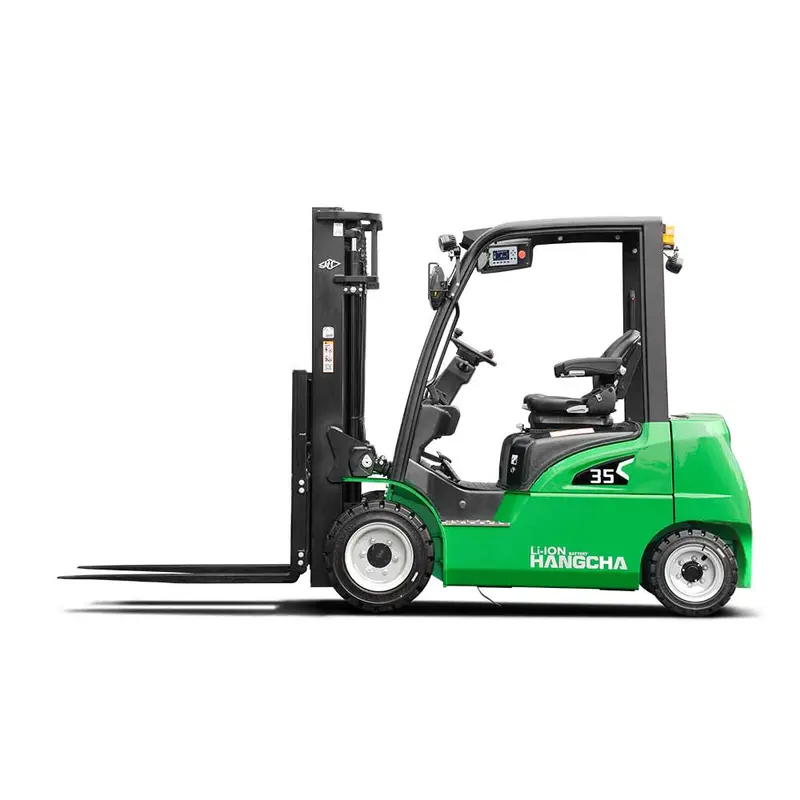
When a new Hangcha truck is selected, ACE C&T discusses the configuration and supply conditions against the confirmed requirement. A new truck should not be treated as incapable of failure; clear operating, inspection and service processes are still required. A sound decision is one in which the required work can be completed, the risk range is understood and total cost is based on verifiable assumptions.
Frequently asked questions
Does this article mean that ACE C&T sells used forklifts?
No. It provides a comparison framework for buyers; ACE C&T focuses on supplying new Hangcha forklifts.
Is the hour-meter reading enough to assess a used forklift?
No. The condition, history, actual configuration and an appropriate technical assessment must also be reviewed.
NEW HANGCHA FORKLIFTS · CONFIGURED FOR YOUR WORK
Send your forklift purchase requirements to ACE C&T
Send the actual load, pallet dimensions, rack height, aisle width, shift schedule and operating location. Purchase price, supply timing, warranty and service are confirmed in each quotation or contract.
Mr. Lê Đình Lê · 0904.070.313 · ledinhle@live.com
Depot: Tu Son, Bac Ninh · Office: Hanoi · Nationwide supply in Vietnam.
Reference sources: Hangcha — lithium truck range. OSHA documents are cited as international technical references and do not replace requirements applicable in Vietnam. ACE C&T prepared the assessment framework, hypothetical scenarios and calculation examples; operating specifications must be confirmed for the actual equipment.