Distinguish routine loads, peak loads and exceptional loads
List at least three groups of goods: the type handled most often, the heaviest type and the type with the most difficult shape. The stated weight must include the pallet or carrying tray. The heaviest item is not necessarily the most demanding: a lighter load that is long, has an offset centre of gravity or must be placed at a high level may impose stricter selection conditions.
Separate exceptional loads from the work repeated every day. If a special load appears only a few times a year, assess a separate handling arrangement instead of automatically buying a larger truck for the entire process. Conversely, a load close to the limit that appears several times in every shift must be treated as a primary requirement. This grouping avoids two common buying errors: selecting too little capacity by looking only at routine goods, or selecting too much because of one rare case.
Read capacity at the required height, not only nominal capacity
Two trucks with the same nominal capacity may use different masts, forks and attachments. Request the remaining capacity at the working height and load centre of the configuration being quoted. Do not use a quick conversion formula in place of the manufacturer's load chart or technical confirmation.
Consider a hypothetical warehouse that must place a pallet with a total weight of 2.2 tonnes on the highest rack level. The fact that 2.2 is below 2.5 does not by itself prove that the 2.5-tonne truck can perform that job. The brief must also include pallet dimensions, fork-entry direction, centre-of-gravity position, mast configuration and any added attachment. The answer may change if the pallet is longer than standard or a side shifter is fitted; buyers need confirmation for the actual combination.
Comparison checklist for the purchasing team
| Criterion | 2.5-tonne option | 3-tonne option |
|---|---|---|
| Capacity at high rack level | Confirm against the load chart for the exact configuration | Confirm against the load chart for the exact configuration |
| Pallet and load centre | Check against the actual goods | Keep the same conditions for comparison |
| Warehouse route | Measure Ast, doorways and turning area | Recheck dimensions and service weight |
| Reference model | CPD25-XEY2HA-SI | CPD30-XEY2HA-SI |
Check whether the larger truck still fits the warehouse
A higher capacity rating may come with changes in dimensions, turning radius, service weight and floor requirements. Buying a 3-tonne truck is useful only if it can reach the load collection and placement points. Measure the aisle at its narrowest point, the clear space at the end of each rack row and the turning area when other goods are waiting, rather than relying on nominal dimensions from an outdated drawing.
For floors or dock plates, compare the load-bearing conditions in the building and equipment documents, including the truck, the load and the appropriate load-distribution factors. Do not infer the truck's own weight from its lifting capacity. If the truck regularly passes through a low doorway, the lowered mast height and overhead guard height may also rule out a configuration even when its stated capacity appears sufficient.
Compare two actual configurations from the Hangcha range
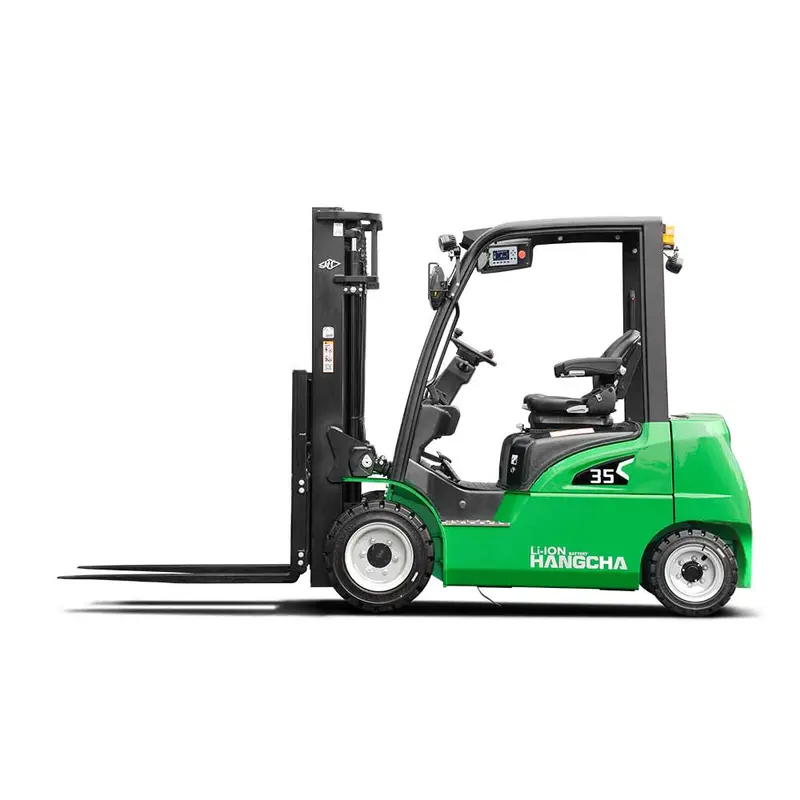
The website catalogue includes XE lithium models such as CPD25-XEY2HA-SI and CPD30-XEY2HA-SI. These are starting points for reviewing capacity, dimensions and battery information for the reference configurations. When requesting a quotation, record the complete truck code, mast and options; do not assume that one product page represents every available variant.
Place the two models side by side in the comparison table with columns for confirmed working capacity, mast, Ast with the actual pallet, lowered mast height, battery, charger and the shift duration each option can support. If you change to another series, rebuild the table instead of carrying over assumptions from the XE series. Compare purchase prices only after both options have passed all mandatory requirement checks.
Create trial criteria that warehouse and purchasing teams both understand
A good criterion describes the scenario clearly enough to perform it safely: pallet type, confirmed weight, placement point, access route and truck configuration. The trial needs a suitable operator and a method approved by the technical team; never exceed the rated limits merely to look for a truck's supposed spare capacity.
Record three groups of observations separately. The first is whether the truck passes or fails the required task; the second is the convenience of visibility, fork entry and turning; the third covers energy use and working duration, which require longer observation. A short test run cannot demonstrate performance over a complete shift. If the factory is not yet operating, document the limitations of the trial in the decision record.
When to choose the smaller option and when to step up the configuration
A 2.5-tonne truck may be the right choice when every task has been confirmed within the limits of the proposed configuration and it fits the warehouse. A 3-tonne truck deserves consideration when load requirements, frequency or production plans mean that the smaller option cannot meet the work. The specific limits still need to be checked; buying extra capacity 'for peace of mind' is not a technical acceptance criterion.
Conclude the decision with a one-page explanation: identify the most demanding task, state which option can perform it, explain which cost difference creates value and mark any data that remains an estimate. ACE C&T can use this brief to advise on a new Hangcha forklift and quote for the selected configuration. The purchase price, supply timing and support conditions for each model are confirmed separately; they must not be inferred from a rental rate or an advertisement for a similar model.
Frequently asked questions
Is a 3-tonne forklift always better than a 2.5-tonne truck?
No. Review the complete work requirement, space and cost. The larger truck is useful only when it appropriately meets a confirmed need.
If the load is below nominal capacity, is that enough to conclude it can be lifted onto the rack?
No. The load, load centre, lift height and complete configuration must be checked against the applicable technical information.
NEW HANGCHA FORKLIFTS · CONFIGURED FOR YOUR WORK
Send your forklift purchase requirements to ACE C&T
Send the actual load, pallet dimensions, rack height, aisle width, shift schedule and operating location. Purchase price, supply timing, warranty and service are confirmed in each quotation or contract.
Mr. Lê Đình Lê · 0904.070.313 · ledinhle@live.com
Depot: Tu Son, Bac Ninh · Office: Hanoi · Nationwide supply in Vietnam.
Reference sources: Hangcha — lithium truck range · OSHA eTool — identifying capacity and configuration on the truck data plate. OSHA documents are cited as international technical references and do not replace requirements applicable in Vietnam. ACE C&T prepared the assessment framework, hypothetical scenarios and calculation examples; operating specifications must be confirmed for the actual equipment.