Start with actual loads, including the most difficult ones
Photograph loads as received and as dispatched, recording their dimensions, weight including packaging, approach direction and permitted contact areas. For paper rolls, record diameter and height; for cartons, record the stacking arrangement and the compression tolerance confirmed by the packaging provider. Clearly distinguish measurements from estimates. Product descriptions such as paper, electrical appliances or food are not enough to select a specific attachment.
Choose several representative situations rather than submitting only the lightest load in the best condition. These can be grouped into three categories: frequently handled goods, the largest loads and goods with damage-sensitive packaging. In a hypothetical example, a warehouse handles mostly uniform pallets but also receives unpalletized loads each week. That situation calls for assessing a separate handling solution before buying clamps for the entire fleet. The aim is to establish which tasks the proposed equipment will cover and which will still need other equipment.
Distinguish functions before adding multiple options to a quotation
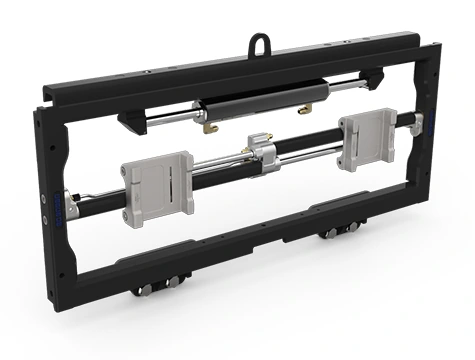
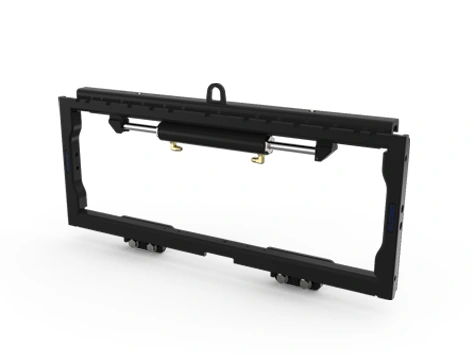
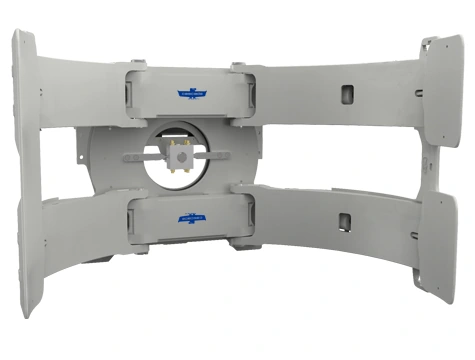
A sideshifter moves the complete fork assembly from side to side; a fork positioner changes the spacing between the forks to suit different pallets. A clamp has the mechanism and contact surfaces needed to hold an appropriate type of load, while a rotator serves tasks that require changing orientation or emptying an approved bin. These are different functions. An ordinary fork positioner is not automatically suitable for clamping, even if its forks can move toward each other.
In the quotation brief, describe each task in verifiable terms: placing a pallet into a measured rack opening, clamping a roll of a specified diameter or rotating a factory bin at a surveyed receiving point. Then ask the supplier to propose the minimum configuration that meets those requirements. This helps avoid paying for numerous movements while still lacking the function the job needs. Combined options must be confirmed against the attachment's actual design.
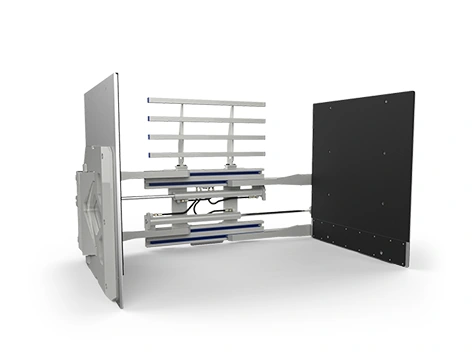
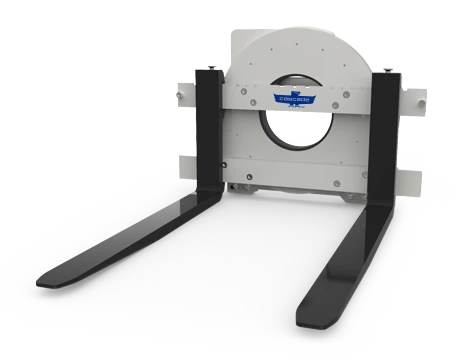
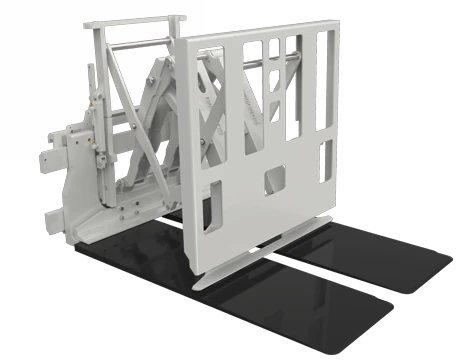
Selection comparison
| Data group | Information to provide | Confirmation to obtain |
|---|---|---|
| Load | Dimensions, weight including packaging and permitted contact areas | Suitable attachment type and working range |
| Truck combination | Truck model, mast, actual height and load centre | Confirmed capacity of the complete configuration |
| Mounting and hydraulics | Carriage, auxiliary functions, pressure and flow | Approved installation and control arrangement |
| Trial and commercial scope | Sample loads, operating cycle and intended usage period | Trial record and quotations covering the same scope |
Check the combination's residual capacity, not just the truck's nominal capacity
Fitting an attachment makes the truck carry the attachment's own weight and may position the load farther forward of the carriage face. Request capacity documentation for the truck, mast and attachment combination at the actual load centre and working height. The permitted load cannot be determined simply by subtracting the attachment's weight from the capacity in the truck's name. That calculation overlooks several factors affecting the configuration.
To make the assessment traceable, retain the truck model, mast type, lift height, attachment model, weight, centre of gravity and effective thickness supplied by the provider. Include the load weight and how the load will be positioned. If a specification is missing, mark it for confirmation rather than entering an average value yourself. Approval of the combination and the appropriate capacity information must be completed before the configuration is put to work.
Confirm mounting and hydraulics during selection
Ask the engineering provider to check the carriage class and dimensions, locking mechanisms, clearances around the mast, hoses and any components that could collide as the equipment moves. Two configurations with the same nominal capacity can still have different mounting interfaces. Also review visibility, overall width, working length and clearances along the warehouse route. An attachment should solve the load-handling problem without creating a new bottleneck at a doorway or turning point.
For a hydraulic attachment, the brief must confirm the number of auxiliary functions, suitable pressure and flow, the control arrangement and installation requirements for the exact model. Do not apply one pressure setting to every clamp or every type of goods. The provider should explain operating limits and post-installation checks, and the buyer should ask for these items to be included in the quotation scope. This work requires a competent provider; it is not guidance for connecting additional hydraulic lines yourself.
Set trial criteria for both productivity and the condition of the goods
Prepare a trial record identifying the load, packaging specification, working route, collection and placement points, responsible warehouse representative and quality assessor. Conduct trials only within the scope approved by the engineering provider and with an appropriate operator. Do not independently increase the load or clamping force to discover the equipment's limits. The results should state what was and was not tested, rather than relying on a general statement that the truck works well.
Assess productivity over a complete cycle: approaching, collecting the load, travelling, placing it and returning the equipment. At the same time, inspect packaging, pressure marks, deformation and any need to reposition goods by hand. In a hypothetical example, a configuration that reduces collection time but increases quality-inspection time may not yet deliver a benefit to the factory. Involving both warehouse and quality teams in the trial helps identify this early.
Compare purchase and hire using the same supply scope
A purchase option is worth assessing when the work is stable, the attachment is used frequently and the business plans to manage the equipment over the long term. A rental option should be considered when testing an application, covering a peak season or addressing demand whose duration is uncertain. These are comparison scenarios, not conclusions that one arrangement is always cheaper. Compare the same configuration confirmed as suitable, the same throughput and the same assumed operating period.
Sales and rental proposals should list the truck, attachment, installation, hydraulic lines, controls, transport, handover checks and maintenance scope separately. For rental, clarify the usage conditions, how changes in the goods will be handled and return requirements; for purchase, clarify documentation, spare parts and services in the quotation. ACE C&T accepts operating briefs to advise on Hangcha forklift configurations. Prices and availability for each option are confirmed against the specific requirement.
Frequently asked questions
Can I buy an attachment first and find a suitable truck afterward?
You can begin with the attachment requirement, but the complete combination should be agreed before ordering. Confirm the capacity, carriage interface, hydraulics, controls and clearances of the truck that will be used. Knowing only the attachment's nominal capacity is not enough to guarantee it will fit any truck.
What should I send for advice on buying or renting a truck with an attachment?
Send photographs of the load and packaging, dimensions, weight, permitted contact areas, placement height, warehouse route and work schedule. If you already have a truck, provide its model and photographs of its nameplate and carriage. Specify whether you intend to buy or rent, the expected usage period and the location so the quotation scope can be prepared fully.
HANGCHA · ACE C&T
Hangcha forklift sales and rental for your operation
Send load photos, weight, dimensions, placement height and your existing truck model to compare purchase and rental options. Compatibility, availability, prices and service scope are confirmed in each quotation.
Mr. Lê Đình Lê · 0904.070.313 · ledinhle@live.com
Technical references: Cascade — attachment groups by function · Cascade — fork positioner guide and combined truck capacity. The evaluation framework and hypothetical examples are prepared by ACE C&T. Each manufacturer document applies to the equipment it describes; the truck and attachment combination requires separate confirmation. This guide supports equipment selection. Installation, settings, load testing and operation must follow the approved documentation and instructions for the specific equipment.